How to Help Your Autistic Co-Workers Feel Safe and Comfortable at Work

Many articles about supporting autistic people in the workplace are aimed at managers and HR. That guidance is important, but it is not the whole story. Autistic employees do not spend most of their day with their supervisors; they spend it with their co-workers.
So, while management is responsible for formal accommodations, neurotypical colleagues play a huge role in whether an autistic person actually feels understood and safe on the job. When those colleagues lack basic awareness of neurodivergence, an autistic worker can feel isolated, even if their direct supervisor ‘gets it’.
If you are a neurotypical co-worker, there are practical things you can do to make work more comfortable for your autistic teammates.
Learn What Autistic Traits Really Mean
You may already know that many autistic people avoid eye contact or have facial expressions, body language, or vocal tones that seem “different.”
Being aware of that surface level is a good start, but going a bit deeper helps you interpret what you are seeing more accurately. Under a neurotypical lens, some autistic traits can look rude, aloof, disrespectful, or even suspicious. In reality, they are simply natural ways the autistic nervous system regulates itself.
Here are a few examples that often get misunderstood.
Stimming
Stimming is not boredom, defiance, or a sign that someone is not paying attention. It is a self-regulation tool. For many autistic people, stimming helps us manage big emotions, cope with sensory overload, or express happiness and excitement.
Stimming can look like hand-flapping, flicking fingers, tapping a foot, bouncing a leg, squeezing a stress ball, humming, squeaking, or making other small sounds. That list is not complete, but it gives you a sense of the variety.
One of the easiest ways you can help is simply not to make a big deal out of it. Do not stare, comment, or treat it as unprofessional. Just keep talking as you normally would.
If you are worried that your autistic co-worker might be distressed, ask about how they are feeling rather than assuming based on behavior alone. For example:
- “Are you feeling anxious?”
- “Do you want me to slow down?”
- “Would it help if I emailed the instructions instead?”
This shows concern without shaming a coping strategy they may not even be consciously aware of.
Literal Thinking
Literal thinking is more than taking a joke at face value. In the workplace, it often shows up as doing a task exactly the way a supervisor explained it, word for word, without imagining alternate methods.
When an autistic person follows instructions to the letter, they are not “showing off,” “trying to outdo” colleagues, or trying to make others look bad. Their brain is simply wired to treat instructions as precise directions, not loose guidelines.

You may also notice that an autistic co-worker repeats the original instructions if the team starts to drift from the plan. They might sound tense or upset as they quote the supervisor. This is usually anxiety about doing the job “wrong,” not an attempt to undermine you.
Recognizing this can help you respond with reassurance instead of defensiveness.
Asking Lots of Questions
Some autistic people learn by asking many questions, almost like a detective piecing together clues. Each question is usually a genuine attempt to understand, not a challenge to your authority or expertise.
If autistic employees feel they will be judged or punished for asking questions, they lose a key method of making information accessible to themselves.
Jaime A. Heidel
If autistic employees feel they will be judged or punished for asking questions, they lose a key method of making information accessible to themselves. Over time, that can make the workplace feel unsafe. Creating space for questions, even detailed ones, is a powerful form of inclusion.
Wanting Breaks and Lunch Alone
Your autistic co-workers may prefer to spend breaks or lunch on their own. This is often not rejection; it is recovery. After hours of managing sensory input and social expectations, they may need quiet time to reset their nervous system so they can handle the rest of the day.

Labeling this as “antisocial” or “rude” is painful and unfair. You can still invite them from time to time, but accept “no” gracefully and avoid pressuring them to join every group activity.
Saying “No” to Office Treats
Food can be complicated for autistic people. There may be allergies, intolerances, or texture and taste sensitivities that make common treats very difficult to eat.
When someone declines your cupcakes or snacks, it is rarely a personal criticism of you or your baking. It is a self-protective choice. Socially punishing an autistic co-worker for turning down food, or repeatedly pushing treats on them can turn the office into a hostile environment for them. Respect their “no” and move on.
Socially punishing an autistic co-worker for turning down food, or repeatedly pushing treats on them can turn the office into a hostile environment for them.
Jaime A. Heidel
Staying Out of Office Gossip
Many autistic people are deeply uncomfortable with gossip. They may avoid conversations where others are dissecting colleagues’ private lives or mocking people behind their backs. From the outside, this can look cold or “above it all,” but for many autistic folks, it is actually the opposite.
Despite stereotypes, a lot of us are highly empathetic and justice-oriented. Rumor-spreading and character attacks can be emotionally upsetting, not entertaining. When your autistic co-worker opts out, they may be protecting their own mental health and values, not judging you.
The Takeaway
When neurotypical people misread autistic traits through their own lens, minor misunderstandings can snowball into serious conflict and mistrust. Seeing these behaviors as natural expressions of a different brain, rather than as insults or flaws, creates a greater sense of safety for everyone.
You do not need to become an expert overnight. Small shifts in how you interpret stimming, literal thinking, questions, boundaries, and quiet time can go a long way toward making your autistic co-workers feel welcome, respected, and truly part of the team.
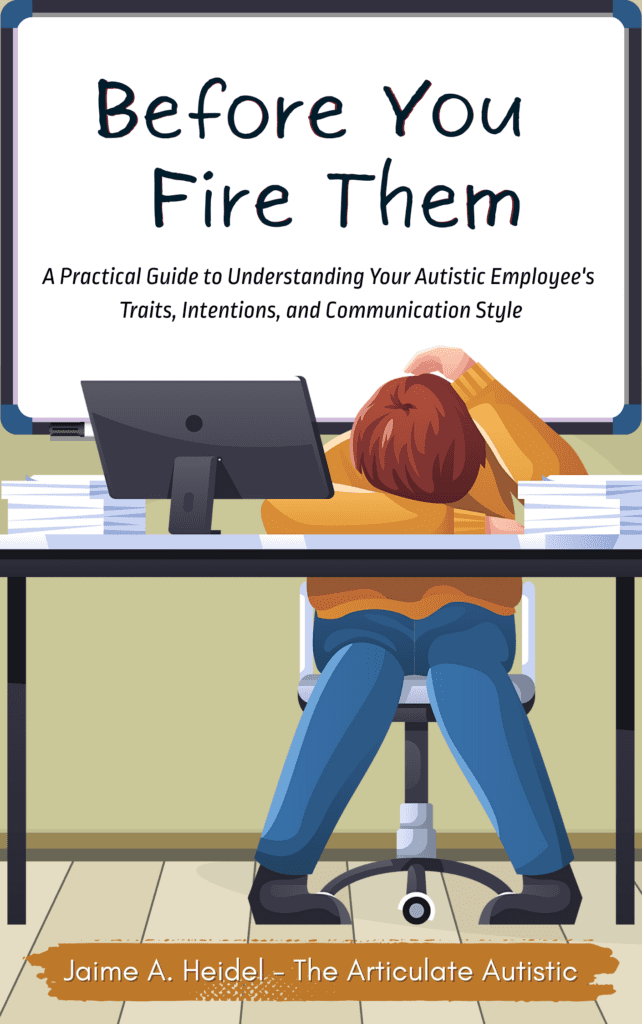
Learn more about your autistic co-workers, their traits, intentions, and communication style by picking up a copy of my new book, Before You Fire Them. Improve morale and reduce uncomfortable misunderstandings between you and your autistic colleagues.