Why You End Up Comforting Your Autistic Partner After They Hurt Your Feelings
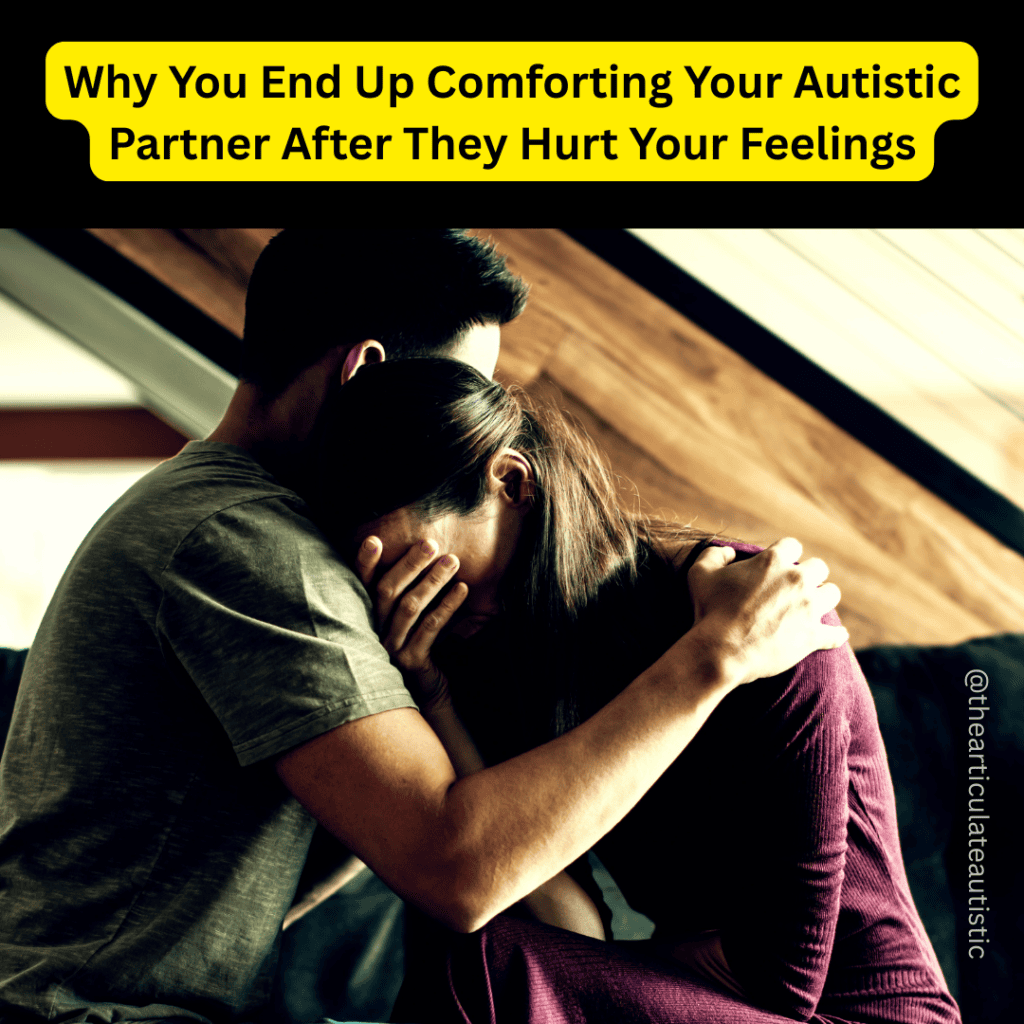
Imagine you are in an argument with your autistic partner. The tension rises, words come out too fast, and then something shifts. You say something in frustration, and your partner suddenly looks stunned. A second later, they are crying, not just tearing up, but fully sobbing.
From a neurotypical point of view, that reaction can look manipulative. It may seem as though the autistic partner is trying to redirect the focus, shut the conflict down, or pressure you into dropping your point so that you will switch from being hurt to comforting them instead.
That interpretation is understandable, but in many autistic relationships, it misses what is actually happening.
The Delay Between Action and Understanding
For many autistic people, there can be a lag between what we did, what you felt, and when that connection finally clicks in our mind. We may not register your discomfort through subtle facial expressions, hints, silence, or a shift in tone.
If you are communicating distress in mostly nonverbal ways, there is a real chance we do not understand that anything serious is wrong yet.
If you are communicating distress in mostly nonverbal ways, there is a real chance we do not understand that anything serious is wrong yet.
Jaime A. Heidel – The Articulate Autistic
Then the moment of understanding hits all at once. It does not arrive gradually. It lands like a shock wave. Suddenly we see, in painful clarity, that something we said or did hurt you. The realization is not mild. It can feel like being hit by a tidal wave of emotion, sensory overload, and self-blame all at the same time.
The Crying Is Often Shock, Empathy, and Panic
When an autistic person starts crying in that moment, it is often not a strategy. It is the combined force of late understanding and intense empathy. We finally grasp your pain, and the knowledge can be unbearable. We may feel horrible that we caused it, terrified that we do not know how to fix it, and panicked because we do not know how to stop ourselves from making the same mistake again.
That is one reason the crying can look so immediate and intense. Once the insight arrives, all the emotional weight arrives with it.
In other words, the tears are often less about trying to escape accountability and more about being overwhelmed by the sudden, unmistakable knowledge that you are hurting and that we caused it.
Why This Creates Such a Painful Dynamic
This is where relationships can become especially confusing. The neurotypical partner feels hurt and may already believe the autistic partner is not taking them seriously. Then the autistic partner breaks down crying. Suddenly the original hurt person is comforting the one who caused the pain.
From the outside, that can feel unfair or even manipulative. From the autistic side, it may feel just as confusing. One minute everything seemed normal, and the next everything was falling apart. We may not understand how things shifted so quickly, especially if the warning signs were indirect or nonverbal.
Some autistic people have gone through this cycle many times without understanding why it keeps happening. All they know is that things are somehow fine one moment and disastrous the next, and by the time they realize what happened, the other person is already deeply upset.
When Nonverbal Signals Never Land
A lot of neurotypical conflict management depends on signals that autistic people may miss. A certain look, a pause, a sharp exhale, a change in posture, a clipped tone – all of these may be obvious to you and almost invisible to us. If the first unmistakable sign of your distress is yelling, crying, or a complete shutdown, then we are not entering the conflict where you entered it. We are arriving much later, when the emotional intensity is already sky high.
If the first unmistakable sign of your distress is yelling, crying, or a complete shutdown, then we are not entering the conflict where you entered it.
Jaime A. Heidel
That delay matters. It means we may not be reacting to the original disagreement the way you are. We may be reacting to the shock of finally understanding the damage.
What Helps Instead
None of this means autistic people should never be held accountable. Accountability still matters. But if you want a healthier interaction, it helps to use direct language sooner rather than waiting for nonverbal cues to do the work.
Instead of hoping your autistic partner notices that you are getting hurt, you may need to say it clearly: “What you just said hurt my feelings,” or “I need you to stop, because I am feeling overwhelmed and upset.” Clear language gives the autistic person a better chance to understand the issue before their nervous system is flooded by the aftermath.
It also helps to remember that the crying itself may not be the main problem. It may be evidence that the autistic person finally understands the emotional reality of the moment and feels it deeply.
The Takeaway
When an autistic partner starts crying after hurting your feelings, it can easily look like attention-seeking or emotional deflection. In many cases, though, it is actually a delayed collision of realization, empathy, and overload.
That does not erase your pain. But understanding what is happening beneath the surface can make the moment less confusing for both of you. If each person can learn how the other processes conflict, there is a much better chance of reaching clarity before both people end up hurting.
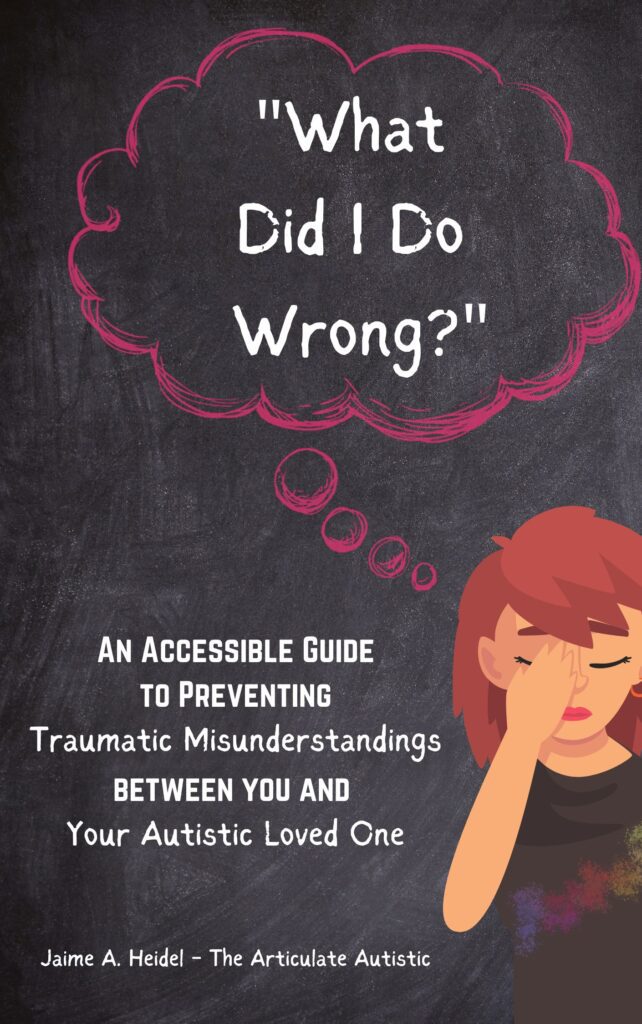
Want to understand your autistic loved one better? My book, “What Did I Do Wrong?” can help you understand your autistic loved one’s point of view and reduce arguments and misunderstandings.